How to Reduce Med Spa No-Shows Without Hiring Anyone
Most med spa no-shows are a system problem, not a patient problem. Take a card or deposit at booking, send an automated text reminder sequence, make rescheduling one tap, and backfill empty slots from a waitlist. In a randomized trial, a simple reminder cut the no-show rate from 23.1 percent to 13.6 percent, no new hire required.
- Why do med spa patients no-show?
- What is a normal no-show rate for a med spa?
- What does a single no-show actually cost?
- Do appointment reminders actually reduce no-shows?
- Should your med spa charge a deposit or a no-show fee?
- The 5-step system that keeps your med spa calendar full
- What should a med spa cancellation policy say?
- Related reading
- A no-show is a booked appointment your system failed to protect, not proof that the patient was flaky.
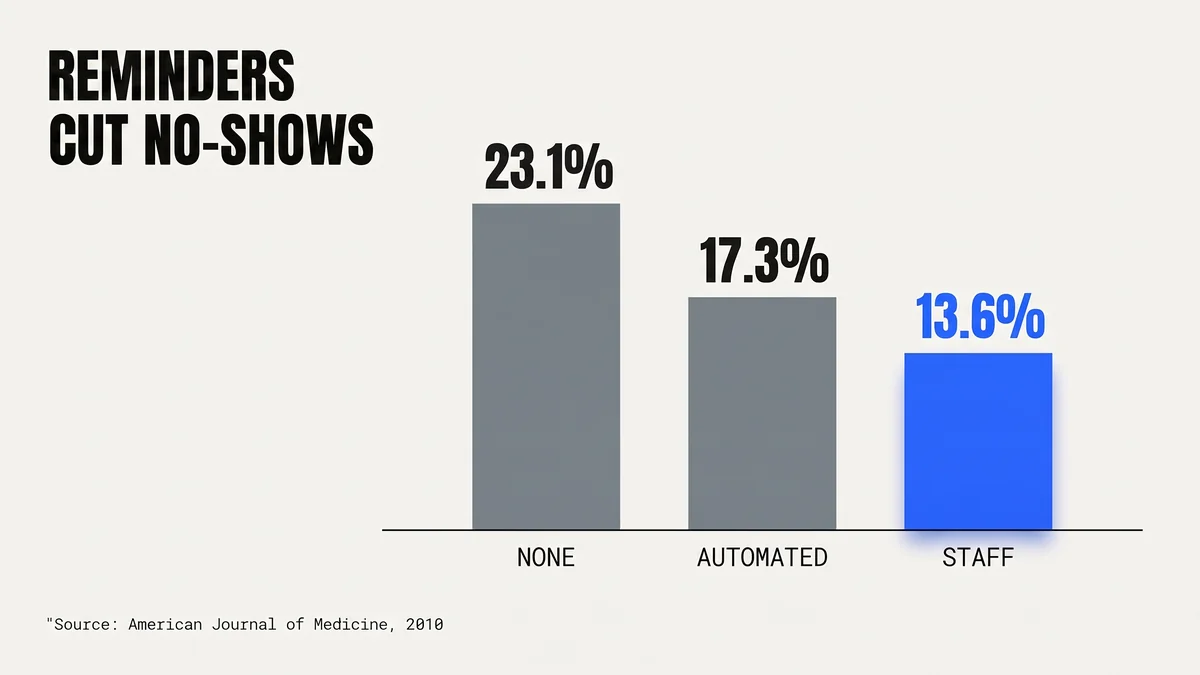
- Reminders work: in a 2010 American Journal of Medicine trial, no-shows fell from 23.1 percent with no reminder to 13.6 percent with a live staff reminder.
- A card on file or a deposit taken at booking gives patients a reason to show up or reschedule instead of ghosting.
- Every empty slot is only lost if it stays empty, so an instant waitlist backfill turns cancellations back into revenue.
- You can cut no-shows without hiring: the work belongs to a booking system running on autopilot, not to another person chasing confirmations.
Lunere Digital builds patient-booking systems for med spas, and the most common leak we find is not a shortage of leads. It is no-shows: booked patients who simply do not arrive. If you want to reduce med spa no-shows, the fix is not nagging patients harder or firing the flaky ones. It is closing the quiet gap between the moment a patient books and the moment she is supposed to walk in, the window where good intentions go cold.
Here is the reframe that changes everything. A no-show is not a character flaw in your patient. It is a booking you let go unprotected. Once you see it that way, the solution stops being about willpower and starts being about the system that surrounds every appointment.
Why do med spa patients no-show?
Most med spa patients who no-show are not angry or unhappy. They forget. They get busy. They feel awkward canceling late, so they say nothing. Or they never got a clear reminder they could actually act on. The common thread is friction and silence in the days between booking and the appointment, not a bad patient.
When we map a med spa's booking flow, the same causes show up again and again:
- No reminder, or a reminder nobody reads. A single email that lands in a promotions tab does almost nothing.
- Nothing at stake. If canceling costs the patient nothing and requires no conversation, ghosting is the path of least resistance.
- Rescheduling is a phone call. When the only way to move an appointment is to call during business hours and feel judged, patients just skip it.
- Too long between booking and visit. A consult booked three weeks out with no contact in between is a consult the patient has half forgotten.
Every one of these is a system gap, and every one of them is fixable without adding a person to your payroll.
What is a normal no-show rate for a med spa?
There is no official med spa benchmark, but the medical research is a fair proxy: outpatient no-show rates commonly run in the high teens to low twenties when patients get no reminder. A well-run med spa that takes a deposit and sends a real reminder sequence can push that into the single digits. If you are not measuring your own rate, assume it is higher than you think.
The number that matters is not the industry average. It is yours, tracked month over month. You cannot fix what you refuse to count, and most owners have never once written their no-show rate down.
What does a single no-show actually cost?
More than one empty slot. A new patient who never arrives is not just today's treatment. She is the follow-up, the membership, the package, and the friends she would have referred over the next year. That is why a no-show rate you shrug at quietly caps your growth.
Run the math on your own numbers. Say a new-patient visit is worth 500 dollars, and one in three of those patients would have become a repeat client worth several thousand over a year. If four patients no-show in a week, you are not out 2,000 dollars. You are out the lifetime value of the one or two who would have stayed. That gap does not show up on a P&L, which is exactly why it goes unmanaged.
An empty chair does not just cost you today's treatment. It costs every rebooking, membership, and referral that patient would have become.
Do appointment reminders actually reduce no-shows?
Yes, and the evidence is not soft. In a randomized trial of nearly 9,800 patients published in the American Journal of Medicine (Parikh et al., 2010), the no-show rate was 23.1 percent for patients who got no reminder, 17.3 percent with an automated reminder, and 13.6 percent with a live reminder from staff. A Cochrane systematic review of eight randomized trials (Gurol-Urganci et al., 2013) found the same pattern: appointment attendance rose from 67.8 percent with no reminder to 78.6 percent with text message reminders.
Two details make this practical for a small med spa. First, the Cochrane review found text message reminders were about as effective as phone calls while costing 55 to 65 percent less per appointment kept. Second, the more personal and timely the reminder, the better it worked. You do not need a person making calls. You need an automated sequence that feels personal and lands where patients actually look, which is a text.
Should your med spa charge a deposit or a no-show fee?
The single most effective change you can make is putting something at stake before the appointment, taken at the moment of booking. A card on file with a clear policy is the low-friction version. An upfront deposit applied to the service is the strong version. A no-show fee billed after the fact is the weakest, because by then the slot is already gone and you are chasing money instead of protecting time.
| Approach | What the patient feels | Effect on no-shows |
|---|---|---|
| No card, no deposit | Nothing at stake | Highest no-show rate |
| Card on file plus clear policy | Gentle accountability | Strong drop, very low friction |
| Deposit applied to the service | Real commitment | Biggest drop, small booking drop-off |
For most solo-injector and small med spas, a card on file plus a simple 24 to 48 hour policy is the sweet spot. It protects your calendar without scaring off first-time patients, and it does the quiet work of filtering out the bookings that were never serious.
The 5-step system that keeps your med spa calendar full
Reducing no-shows is not one trick. It is a short chain of steps that run automatically around every appointment. Build this once and it works on every patient, every time.
- Take a card on file or a deposit at booking. Collect it the instant the patient picks a time, not later. This single step does more than any reminder.
- Send an automated confirmation, then a reminder sequence. Text-first, at 72 hours, 24 hours, and 2 hours before the visit. Confirm the date, the treatment, and how to reschedule in one tap.
- Make rescheduling one tap, never a phone call. A patient who can move an appointment in five seconds will move it instead of vanishing. Your website has to make this effortless.
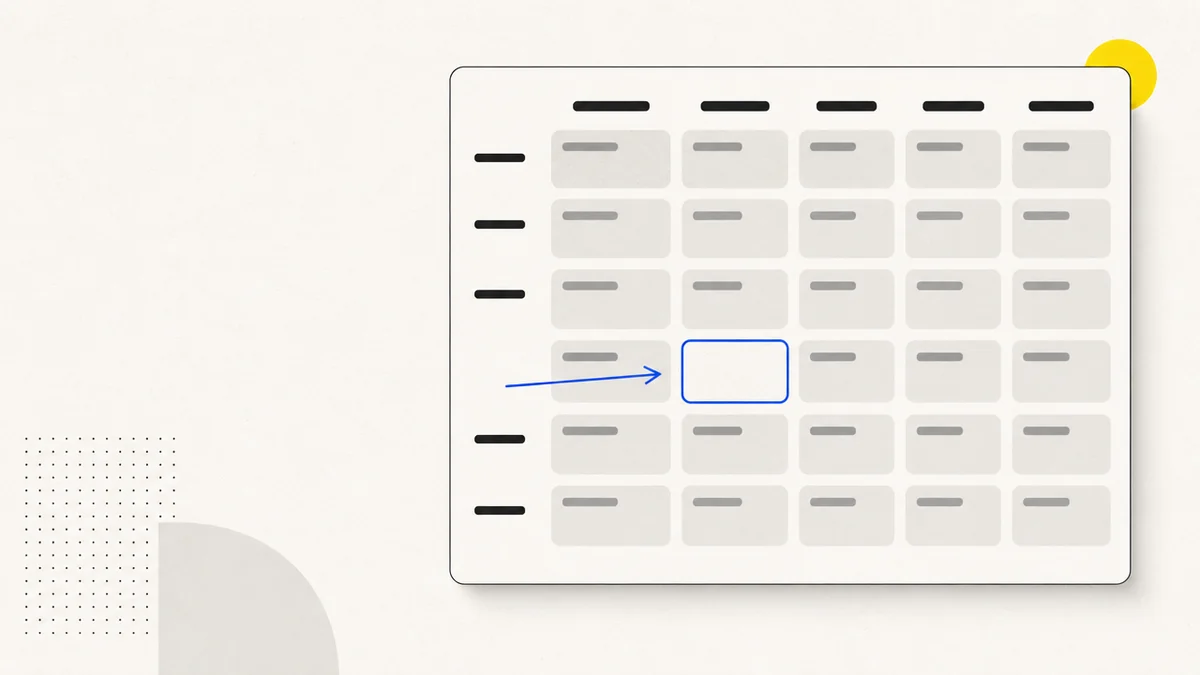
- Backfill instantly from a waitlist. When someone cancels, the slot should offer itself to the next patient in line automatically. A canceled appointment is only lost revenue if it stays empty.
- Track your no-show rate monthly. Watch the number, tie it to the changes you made, and keep tightening. What gets measured gets fixed.
Notice what is not on this list: hiring. Every step above is a system behavior, not a job description.
| Reminders and confirmations | Manual front desk | Automated booking system |
|---|---|---|
| Who gets a reminder | Whoever staff remembers | Every patient, every time |
| Speed to fill a cancellation | Hours or days, if at all | Minutes, from the waitlist |
| Nights and weekends | Nobody is working | Still booking and confirming |
| Cost to scale | Another salary | The same system, more patients |
The same booking system that reduces no-shows also answers a new inquiry before the patient cools off. That is the 5-minute lead response rule working on the front end while the reminder sequence works on the back end.
What should a med spa cancellation policy say?
Keep it short, firm, and friendly, and show it before the patient confirms, not buried in a footer. It should name the window, the consequence, and the easy way out. Patients respect a clear policy. They resent a vague one that surprises them later.
Sample policy: "We hold your appointment with a card on file. Life happens, so you can reschedule or cancel free up to 24 hours before your visit with one tap in your confirmation text. Inside 24 hours, a 50 dollar fee applies. No-shows are charged in full." Clear, kind, and it does the work for you.
My honest view after building these systems: a no-show is almost never the patient's fault. It is a gap in your booking flow that let the appointment go cold. Fix the flow and the "flaky patients" quietly turn into your most loyal ones.
Related reading
- The 5-Minute Rule That Decides Which Med Spa Books
- What a Med Spa Website Must Do in 2026
- Why GoDaddy Builder Is Costing You Local SEO
FAQ
What is a good no-show rate for a med spa?+
There is no official aesthetics benchmark, but medical research puts unmanaged outpatient no-show rates in the high teens to low twenties. In a 2010 American Journal of Medicine trial, patients with no reminder no-showed 23.1 percent of the time. A med spa that takes a deposit and sends an automated reminder sequence can realistically get into the single digits. Track your own rate monthly and aim to beat last month.
Do deposits stop patients from booking?+
A small deposit or a card on file causes some drop-off, but the bookings it filters out are usually the least committed ones, the same patients most likely to no-show. For most med spas the trade is worth it: a slightly shorter booking list made of patients who actually arrive beats a long list full of gaps.
How many appointment reminders should I send?+
A confirmation at booking plus three reminders is a strong default: 72 hours, 24 hours, and 2 hours before the visit, text-first. The Cochrane review found text reminders about as effective as phone calls at 55 to 65 percent lower cost, so automate them rather than making calls by hand.
Can I reduce no-shows without hiring a front desk person?+
Yes. Every proven lever, a card at booking, an automated reminder sequence, one-tap rescheduling, and waitlist backfill, is a system behavior, not a job. A booking system runs all of it 24/7 without a new salary, which is exactly what Lunere builds for med spas.
Is it better to charge a no-show fee or take a deposit?+
Take the deposit or card on file at booking. A no-show fee billed after the fact is the weakest option because the slot is already gone and you are chasing money. Protecting the appointment before it happens beats penalizing a patient after it is lost.
How many patients is your med spa losing to no-shows?
Your free Patient Booking Scorecard shows where your booking flow leaks, from first click to confirmed appointment, and what each gap costs you every month. 2 minutes, no call.
Get my free scorecard